
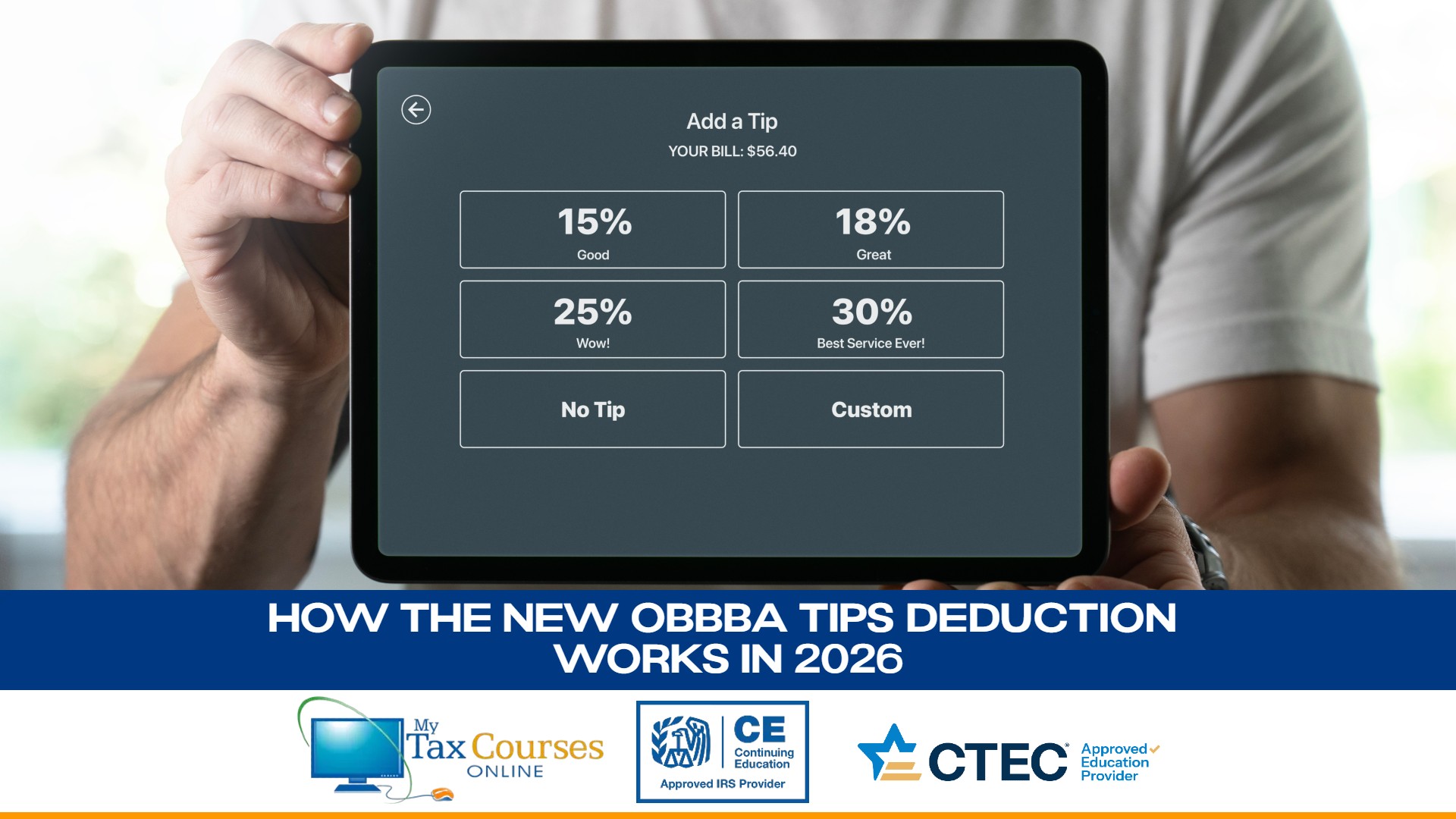
The new OBBBA tips deduction may sound straightforward, but the 2026 rules are creating far more complexity than many tax professionals expected.
While 2025 allowed flexibility when reporting systems weren’t fully built out, 2026 introduces stricter reporting requirements, new documentation standards, and higher risks for missed deductions.
For tax professionals preparing returns in 2026, understanding what qualifies and what doesn’t has become increasingly important.
Here’s what tax professionals need to know.
1. Qualifying Tips Must Be Voluntary
Not every payment labeled as a “tip” qualifies.
Under the new rules, qualifying tips must be:
- Paid voluntarily by the customer
- Paid in cash
- Paid through credit/debit card transactions
- Properly tracked and reported
These do NOT qualify:
- Automatic gratuities
- Mandatory service charges
- Non-cash tips
- Cryptocurrency tips
- Tickets, gifts, or property given as “tips”
For example:
If a restaurant automatically adds an 18% gratuity for a large party, that payment does not qualify because the customer didn’t voluntarily choose the amount.
2. W-2 Reporting Changes Begin in 2026
This is one of the biggest changes.
For 2025 returns:
- Employers were not required to separately identify qualifying tips
- Tax professionals could use reasonable methods when records were incomplete
But beginning in 2026:
- Employers must separately identify qualifying tips
- Qualifying tips must appear in Box 12 using Code TP
- Total tips will still appear in Box 7
This shifts much of the responsibility from tax preparers to employers, but it also creates new reporting responsibilities for businesses.
3. Self-Employed Clients Face Bigger Challenges
This may be one of the most overlooked issues.
Many self-employed workers assume they can simply report tips on Schedule C and claim the deduction.
That’s not how the rule works.
For 2026:
Tips must be separately reported on:
- Form 1099-K
- Form 1099-NEC
- Form 1099-MISC
If tips are not separately reported?
The deduction may be lost.
4. Not Every Industry Qualifies
Final regulations added new qualifying occupations:
- Visual artists
- Floral designers
- Gas pump attendants
However, there’s still uncertainty involving:
Specified Service Trades or Businesses (SSTBs)
Current guidance temporarily delays the implementation of restrictions for SSTBs until future regulations are finalized.
For now:
The restriction does not apply in 2026.
That could change later depending on future IRS guidance.
5. The Deduction Has Income Limitations
The deduction is not unlimited.
For self-employed individuals:
The deduction is limited to the lesser of:
- $25,000
- Net self-employment income after adjustments
Those adjustments may include:
- Half of the self-employment tax
- Self-employed health insurance deductions
- SEP contributions
- Other qualifying adjustments
This is where many preparers could accidentally overstate deductions.
Why This Matters
Many clients may assume: “Tips are tips.”
But under the new rules:
- Some qualify
- Some don’t
- Some require additional documentation
- Some may lose deductions entirely due to reporting failures
These are exactly the types of mistakes that can create amended returns, missed deductions, and frustrated clients.
Learn More: 2026 OBBBA: What Happens Next
If you want deeper guidance on these rules, including charitable deduction changes, Trump Accounts, 529 updates, the Kwong case, and additional planning opportunities, our course breaks it all down.
2026 OBBBA: What Happens Next walks through the real-world tax implications professionals need to understand now. Click here to learn more.
External Sources & References
IRS: How to Take Advantage of No Tax on Tips and Overtime
IRS FAQs: Qualified Overtime Compensation Deduction
U.S. Department of Labor – Fair Labor Standards Act (FLSA) Overtime Rules
IRS Internal Revenue Bulletin 2026-18