
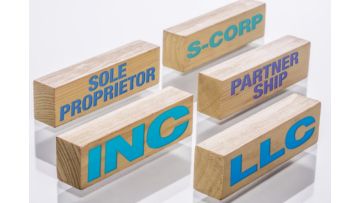
Business owners frequently ask whether they should operate as a sole proprietor, LLC, S corporation, partnership, or C corporation. While many assume one entity is always better than another, the reality is that entity selection depends on income level, tax goals, compliance requirements, and long-term business objectives.
This course provides a practical overview of how various business entities are taxed and how entity selection decisions affect self-employment taxes, payroll taxes, deductions, retirement planning opportunities, and overall tax liability. Through real-world examples and case studies, participants will gain a clearer understanding of the factors that drive successful entity planning decisions.
Special attention is given to LLC taxation, S corporation elections, QBI deduction considerations, and situations where C corporations may provide unique planning opportunities.
Learning Objectives
Upon completion of this course, participants will be able to:
• Identify the primary business entity types and how they are taxed
• Compare tax outcomes among sole proprietorships, LLCs, partnerships, S corporations, and C corporations
• Explain the impact of self-employment taxes on entity planning decisions
• Understand how the Qualified Business Income (QBI) deduction influences entity selection
• Recognize when an S corporation election may benefit a business owner
• Identify common misconceptions regarding LLC taxation and entity planning
• Understand the importance of coordinating tax and legal considerations when evaluating entity structures
This course counts for 2 Hours of Federal Tax Law for IRS Continuing Education.
Frequently Asked Questions
Is an LLC or an S corporation better for taxes?
There is no one-size-fits-all answer. The best choice depends on income level, self-employment tax exposure, payroll requirements, QBI deductions, administrative costs, and long-term business goals.
What are the most common entity selection mistakes?
Common mistakes include assuming LLCs automatically reduce taxes, failing to consider QBI deductions, overlooking reasonable compensation requirements, and selecting an entity without evaluating long-term business objectives.
What is the difference between an LLC and an S corporation?
An LLC is a legal entity formed under state law. An S corporation is a federal tax election that can be made by an eligible LLC or corporation.
What business entities are covered in this course?
The course discusses sole proprietorships, partnerships, LLCs, S corporations, and C corporations.
Why is entity selection important?
The choice of entity can impact taxes, payroll obligations, deductions, retirement opportunities, and overall business operations.
Do all business owners benefit from becoming an S corporation?
No. The benefits depend on income level, business goals, payroll requirements, and other tax considerations.
What is self-employment tax?
Self-employment tax consists of Social Security and Medicare taxes paid by self-employed individuals on business income.
Can a business change its entity type later?
In many cases, yes. Businesses may be able to make tax elections or restructure as their needs evolve, though tax consequences should be reviewed beforehand.
How does the QBI deduction affect small business owners?
The Qualified Business Income deduction may allow eligible taxpayers to deduct a portion of business income, potentially reducing overall tax liability.
Who should take this course?
This course is ideal for tax professionals who prepare returns and advise small business owners, independent contractors, consultants, and self-employed individuals.
About the presenter:
Jason Dinesen (EA, LPA) is a tax nerd, entrepreneur, tax expert, and a well-known presenter of continuing education courses.
Known for his sharp tax interpretations, he is one of the quickest to bring the analysis of the latest tax updates and IRS guidance to the professional community. Jason has coached over 200,000 accounting, tax, and HR professionals on various topics of accounting, individual taxation, corporate taxation, professional ethics, and much more.
He has presented dozens of webinars on Form 1099 (for 10 years on this subject!), marriage in the tax code, tax updates, the new Form W-4, payroll updates, filing status, tax credits, corporation and partnership taxation, and other issues relating to the modern-day setting.